Menswear / Formal Trousers The Trouser Engineering Lab Sheet 05 / 10
Options Mall logo Options Mallformalpantsnearme.com
Sheet 05 / Archive ML Fibre · Weave · Care

Formal trouser fabric guide The material library.

Cut decides the shape of a pair of men's formal trousers; cloth decides how that shape behaves. This archive files the materials most often used for formal trousers for men — fibre by fibre, weave by weave — and records the general tendencies of each: how it drapes, how it breathes, how it creases and how it should be cared for.

  1. AAccession index
  2. BFibre drawers
  3. CWeaves & surfaces
  4. DClimate
  5. ECare protocol
  6. FReading a fabric
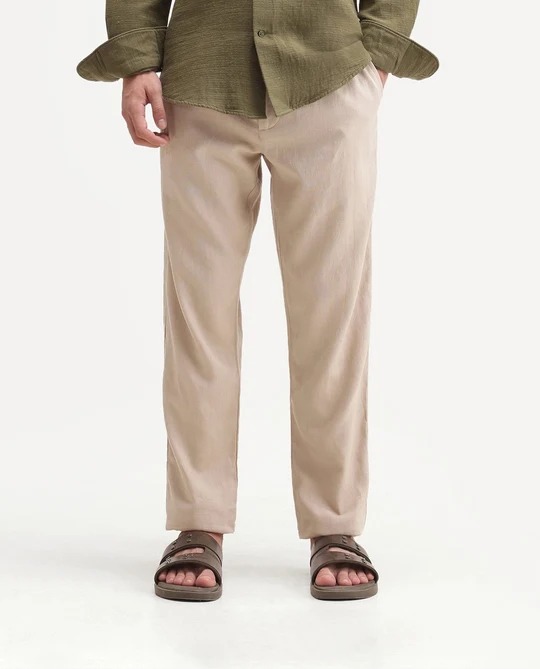
Man in relaxed light beige trousers with an olive shirt and leather sandals, front view
Plate A — Light beige trousers, olive shirtLinen-look drape
General fabric education

Everything in this library describes the general characteristics of fibre types and weaves. It is not verified product information from Options Mall, it does not describe Options Mall's inventory, and it does not state the fibre content of any garment pictured. Photographs are reference images chosen to illustrate a drape, tone or surface. Real behaviour always depends on the specific yarn, weave, weight and finish — the garment's own label is the authority.

§ 03Fibre drawers

Opening the drawers.

Each drawer records one family of formal trouser fabric. The gauges on the card are qualitative — a marker leaning towards one end means the material tends that way in general, not that it has been measured. Weight, weave and finish can move any marker a long way in either direction.

ML-01Animal fibre

Wool

Drape
Crisp to Fluid: leans fluid
Structure
Soft to Firm: sits between the two
Air
Close to Open: leans open
Surface
Matte to Lustrous: sits between the two
Recovery
Creases to Springs back: leans springs back

General tendencies

Wool is the traditional cloth of tailoring, and still the reference against which other formal trouser fabrics are judged. The fibre has a natural crimp that gives it spring: a wool trouser tends to hang in a clean, weighted line, hold a pressed crease, and let small wrinkles relax out overnight. Wool also absorbs moisture vapour before it feels damp, which is why a lightweight wool can feel more comfortable on a warm day than its reputation suggests.

ML-01.1

Worsted

Spun from long fibres that have been combed parallel before spinning. The yarn is smooth and strong, so worsted cloth has a clean surface, a defined weave and a crisp, dressy finish. Most suit and formal trouser cloths are worsteds.

ML-01.2

Woollen

Spun from shorter, carded fibres that lie in many directions. The yarn is loftier and hairier, so woollen cloth is softer, warmer and more textured, with a fuzzier surface. Tweeds and many flannels fall into this family.

ML-01.3

Tropical & lightweight wool

A general term for light, often open-weave worsteds designed to let air through. Tightly twisted yarns in a plain or open weave give a dry, slightly crisp hand that resists creasing better than most warm-weather alternatives.

ML-01.4

Flannel

A wool cloth with a brushed, napped surface that softens the weave and blurs it into a gentle, matte texture. Flannel drapes heavily and reads relaxed yet refined. It is a cool-weather or air-conditioned-office cloth rather than a summer one.

Season
Year-round in the right weight. In humid heat, look for lighter, more open weaves rather than flannel. Lightweight worsteds are a common choice for air-conditioned offices that sit inside a hot city.
Care
Hang by the hem or fold along the crease over a shaped hanger, and give wool a day's rest between wears so the fibres can recover. Brush rather than wash between wears where the care label allows; steam to release wrinkles and press only through a cloth to avoid shine.

Wool's crease-holding is why the pressed centre line — a fixture of formal trousers since around the turn of the twentieth century — looks so natural in it. See how the crease and hem are built on the construction sheet.
ML-02Plant fibre

Cotton

Drape
Crisp to Fluid: sits between the two
Structure
Soft to Firm: sits between the two
Air
Close to Open: leans open
Surface
Matte to Lustrous: leans matte
Recovery
Creases to Springs back: leans creases

General tendencies

Cotton is breathable, soft against the skin and familiar. As a trouser cloth it is usually woven densely so it can take wear, which gives it a matte, slightly casual character compared with fine wool. Cotton creases more readily and recovers more slowly, so it rewards pressing and benefits from a cut with a little ease. Weave and weight decide whether a cotton trouser reads as office wear or weekend wear.

ML-02.1

Cotton twill

A diagonal weave that produces visible fine ribs running at an angle. Twill is durable and drapes better than a plain weave of the same weight, which makes it the backbone of most cotton trousers.

ML-02.2

Cotton gabardine

A tightly woven, steep twill with a smooth face and a firm, almost hard finish. Gabardine looks cleaner and dressier than ordinary twill and holds a crease relatively well for a cotton.

ML-02.3

Chino-weight cotton

A medium-weight twill associated with chinos. It reads relaxed and practical: well suited to business casual, less suited to dark-suit formality.

Season
Warm months, smart-casual. Comfortable in humid heat because it breathes and absorbs moisture, though it can look rumpled by evening. Lighter twills feel cooler than heavy chino weights.
Care
Follow the care label: many cottons can be washed, but heat and harsh drying can shrink or fade them. Turn dark cottons inside out, dry them in shade, and press while very slightly damp for a sharper crease.
ML-03Plant fibre (flax)

Linen

Drape
Crisp to Fluid: sits between the two
Structure
Soft to Firm: leans soft
Air
Close to Open: leans open
Surface
Matte to Lustrous: leans matte
Recovery
Creases to Springs back: leans creases

General tendencies

Linen is spun from flax and is among the coolest cloths a man can wear. Its fibres are long and fairly rigid, so linen has a dry, crisp hand when new and softens with washing and wear. The yarn is naturally irregular, giving the surface small slubs and a gentle, uneven texture. Linen wrinkles readily and does not spring back the way wool does — those soft creases are part of its character, and in relaxed dressing they are accepted rather than fought.

ML-03.1

Linen blends

Linen is frequently blended with cotton, viscose or wool. Blends usually keep much of linen's dry texture and visual ease while softening the hand and reducing how sharply it creases.

Season
Hot, humid months. Linen and linen blends are a natural fit for heat and humidity of the kind Mumbai sees for much of the year, especially for outdoor time and travel. In a formal office, a linen-look trouser reads relaxed; keep the rest of the outfit crisp to balance it.
Care
Follow the care label. Steam or press while slightly damp for the cleanest finish, hang immediately after wearing, and accept a degree of softness by mid-day — over-pressing linen to a hard crease works against its nature.
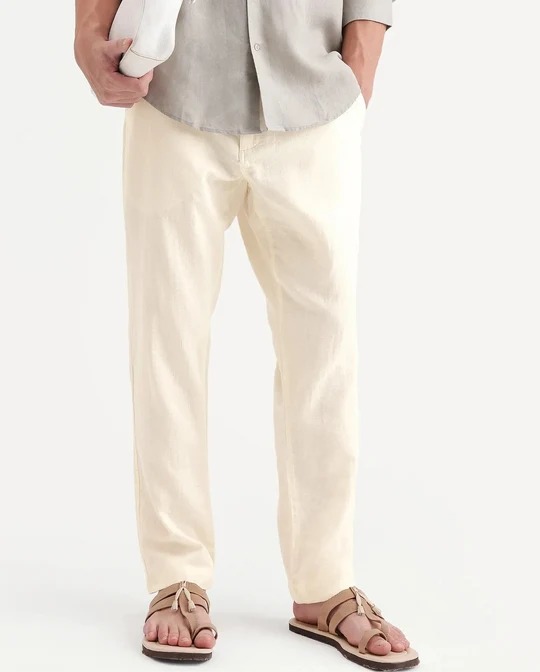
Man in relaxed cream trousers with a grey shirt and leather sandals, front view
Plate B — Cream trousers, grey shirtLinen-look drape

Plates A and B illustrate the relaxed, softly creased drape associated with linen and linen blends. The fibre content of these garments is not stated here.

ML-04Blend

Wool blends

Drape
Crisp to Fluid: sits between the two
Structure
Soft to Firm: sits between the two
Air
Close to Open: sits between the two
Surface
Matte to Lustrous: sits between the two
Recovery
Creases to Springs back: leans springs back

General tendencies

Wool is commonly blended with polyester, viscose, nylon or a touch of elastane. The aim is usually practical: to add durability, reduce weight or cost, increase crease resistance or add stretch while keeping much of wool's drape and appearance. A well-balanced wool blend can look very close to pure wool across a room; up close it may feel smoother or slightly less lively, and it may breathe a little less as the synthetic share rises.

Season
Year-round office wear. A sensible choice for long working days in air-conditioned offices with hot commutes in between — the wool content helps comfort, the blend helps the trouser keep its shape.
Care
Treat it as wool unless the care label says otherwise: hang between wears, steam to refresh, press with a cloth. Blends often tolerate more frequent wear than pure wool.
ML-05Blend

Cotton blends

Drape
Crisp to Fluid: sits between the two
Structure
Soft to Firm: sits between the two
Air
Close to Open: sits between the two
Surface
Matte to Lustrous: sits between the two
Recovery
Creases to Springs back: sits between the two

General tendencies

Cotton is often combined with polyester, viscose, linen or elastane. Polyester adds crease resistance and colour stability; viscose adds softness and fluidity; linen adds texture and coolness; elastane adds give. The result is usually a trouser that keeps cotton's matte, comfortable character but needs less ironing and holds its shape better through the day.

Season
Everyday office wear. Comfortable in warm weather, though breathability tends to drop as synthetic content rises. Lighter weaves feel cooler than dense ones.
Care
Usually washable — but always check the label, because blends combine fibres with different heat tolerances. Moderate temperatures and line-drying in shade help preserve colour and shape.
ML-06Blend with elastane

Stretch blends

Drape
Crisp to Fluid: sits between the two
Structure
Soft to Firm: sits between the two
Air
Close to Open: sits between the two
Surface
Matte to Lustrous: sits between the two
Recovery
Creases to Springs back: leans springs back

General tendencies

Elastane (also sold under trade names such as spandex or Lycra) is a highly elastic synthetic fibre. In trouser cloths it is usually present only as a small share of the blend, added to wool, cotton or polyester to give the fabric comfort stretch. Stretch lets a slim fit formal pant move with the body — sitting, climbing stairs, commuting — without straining at the seat or knee, and it helps the cloth recover after bending.

Season
Commuting, long days. The base fibre decides how cool a stretch trouser feels. Stretch cotton breathes better than stretch polyester, for example.
Care
Heat is the main enemy of elastane: high-temperature washing, tumble drying and very hot irons can weaken it over time, leading to bagging. Follow the label and keep the iron moderate.

Stretch changes how a slim cut can be engineered: a little give lets a closer line stay comfortable. The men's trouser fit guide explains how seat, thigh and knee room interact with it.

ML-07Synthetic / regenerated

Polyester & poly-viscose

Drape
Crisp to Fluid: sits between the two
Structure
Soft to Firm: leans firm
Air
Close to Open: leans close
Surface
Matte to Lustrous: leans lustrous
Recovery
Creases to Springs back: leans springs back

General tendencies

Polyester is a synthetic fibre valued for strength, colour-fastness and crease resistance: it holds a pressed line and shrugs off wrinkles. Viscose is a regenerated cellulose fibre with a soft, fluid drape and a gentle sheen. Blended together as poly-viscose (often abbreviated PV), they make a familiar formal trouser cloth: smooth, easy to care for, consistent in colour and economical, with a drape somewhere between crisp and fluid.

Season
Easy-care office and uniform wear. Polyester-rich cloths breathe less than natural fibres, which matters in humid heat. Viscose content helps a little; lighter weights and an easier cut help more.
Care
Generally easy-care — but polyester can pick up shine from a hot iron and viscose can weaken when wet, so follow the label, use moderate heat and press through a cloth.
§ 04Weaves & surfaces

The surface
under the loupe.

Two cloths spun from the same fibre can look entirely different because of how they are woven. Weave decides texture, sheen, the way light breaks across the leg, and even how a fabric creases. These are the weaves and surface effects most often met in formal trousers and other formalwear.

  1. ML-W1

    Gabardine

    A tight, steep twill with fine, closely packed diagonal ribs and a smooth, hard face. Gabardine drapes cleanly, resists wear and looks unmistakably dressed. It can be woven in wool, cotton or synthetics.

  2. ML-W2

    Twill

    Any weave where the weft passes over and under warp threads in a stepped pattern, creating diagonal lines. Twills drape better and hide soiling better than plain weaves, which is why they dominate formal trouser fabric.

  3. ML-W3

    Hopsack

    A basket weave where pairs of threads cross pairs, giving a small, open, chequered texture. Hopsack lets air through, resists creasing and has a quietly textured look — a classic warm-weather choice.

  4. ML-W4

    Sharkskin

    Two tones of yarn woven in a fine twill to create a tiny stepped pattern and a subtle, almost metallic sheen. Up close it looks textured; from a distance it reads as a solid, slightly luminous colour.

  5. ML-W5

    Herringbone

    A twill that reverses direction at regular intervals, creating a zigzag reminiscent of fish bones. Small-scale herringbones read as texture; larger ones read as pattern and lean towards heritage or country dressing.

  6. ML-W6

    Melange

    Not a weave but a colour effect: fibres of different shades are blended before spinning, so the cloth looks heathered and soft-toned. Melange hides lint and minor creasing and softens dark colours.

  7. ML-W7

    Dobby

    Small geometric figures — dots, ribs, tiny diamonds — woven into the cloth on a dobby attachment of the loom. The texture is subtle and structural rather than printed, adding depth to a plain colour.

Surface specimens

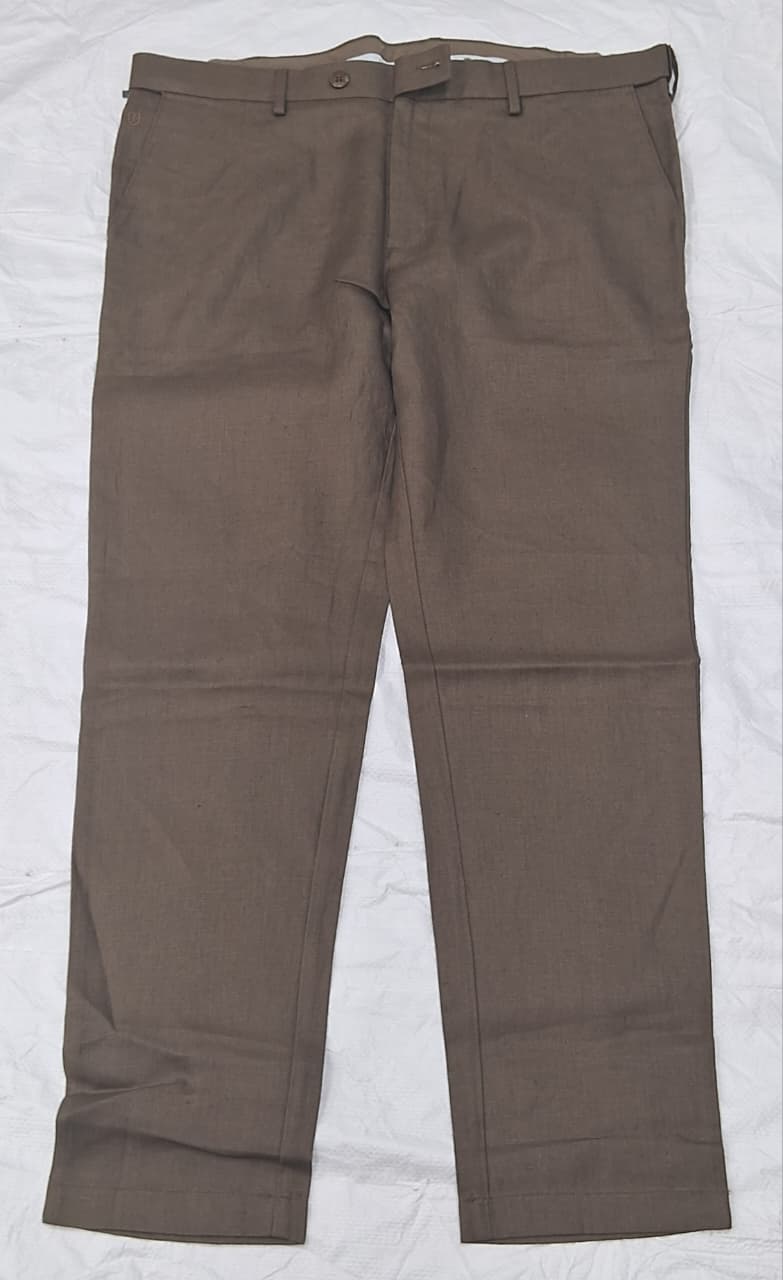
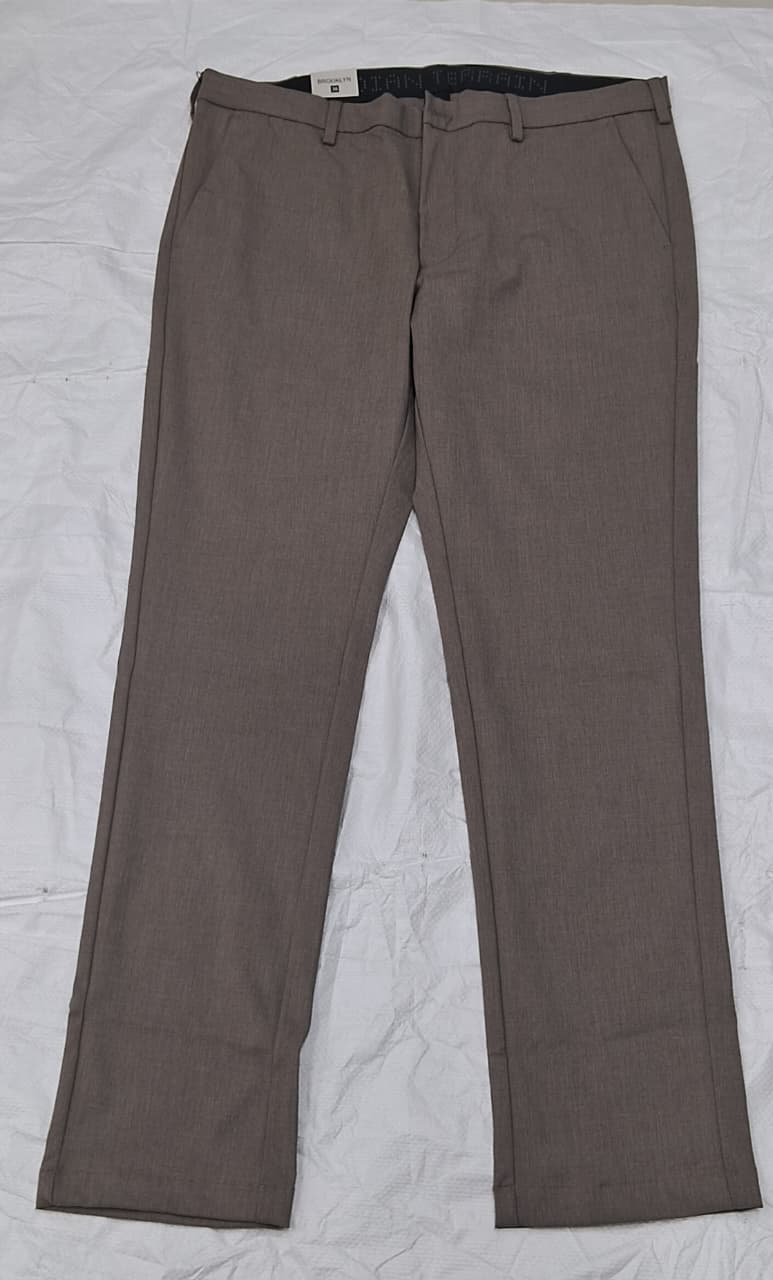
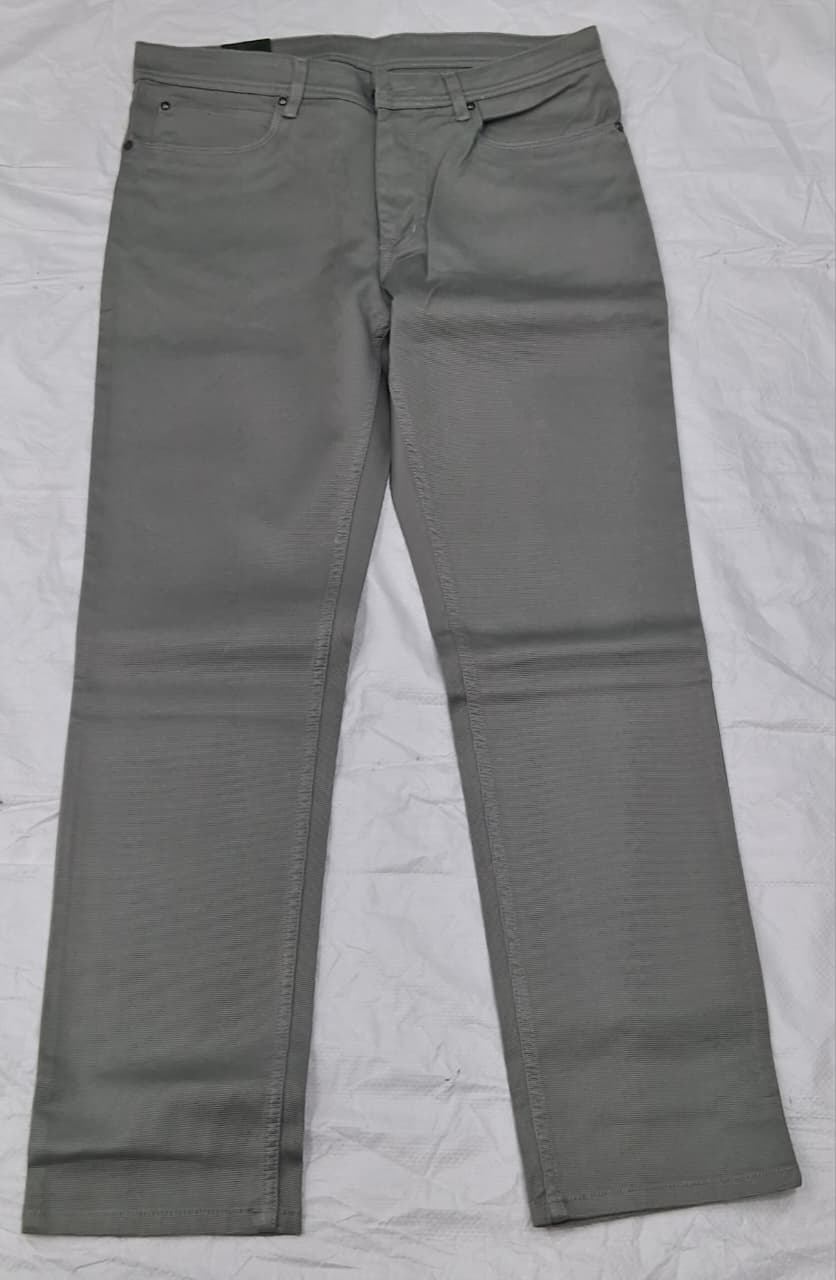
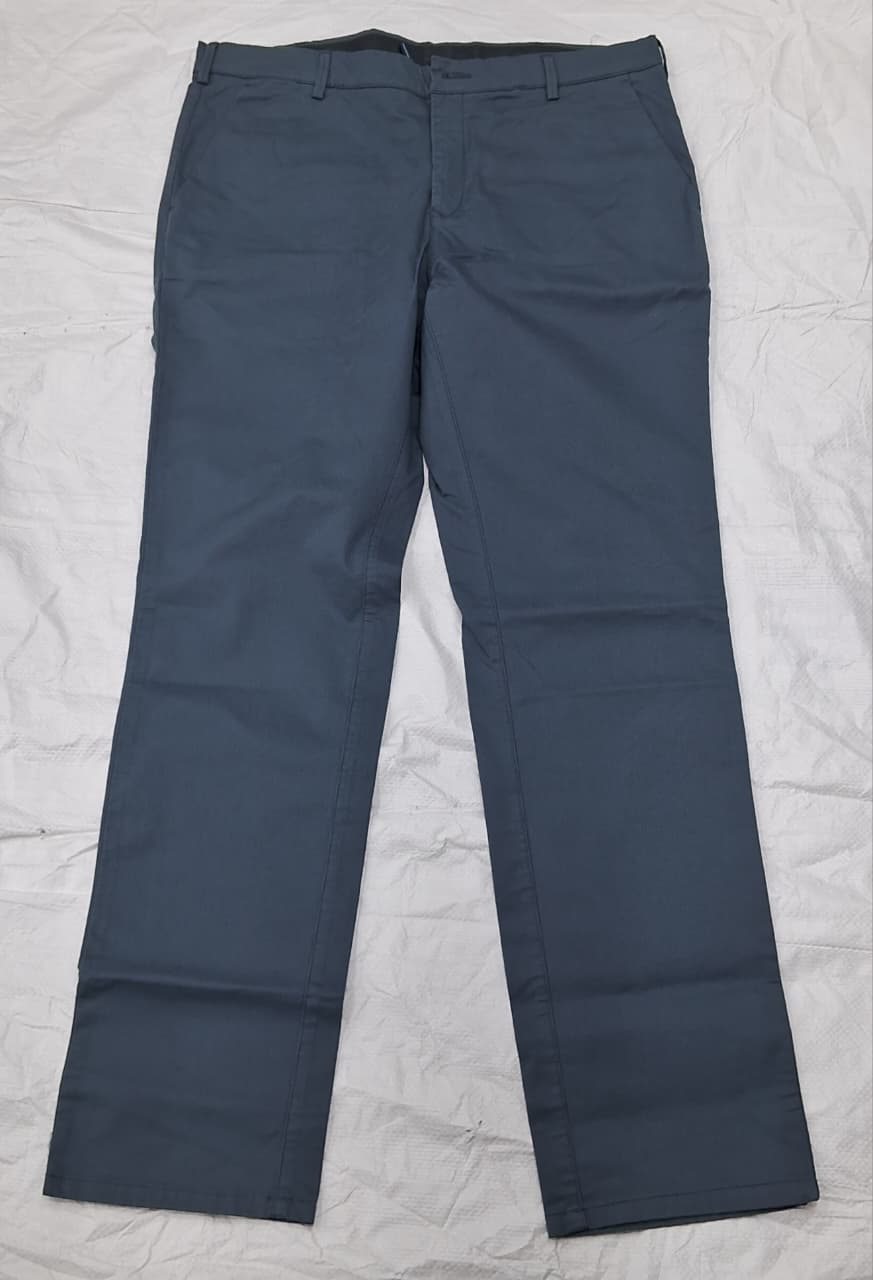
Five reference trousers photographed flat, each with a magnified detail. They are filed by what the eye can see — tone and surface — not by fibre, which these photographs cannot show. Use them to train your eye for texture scale.

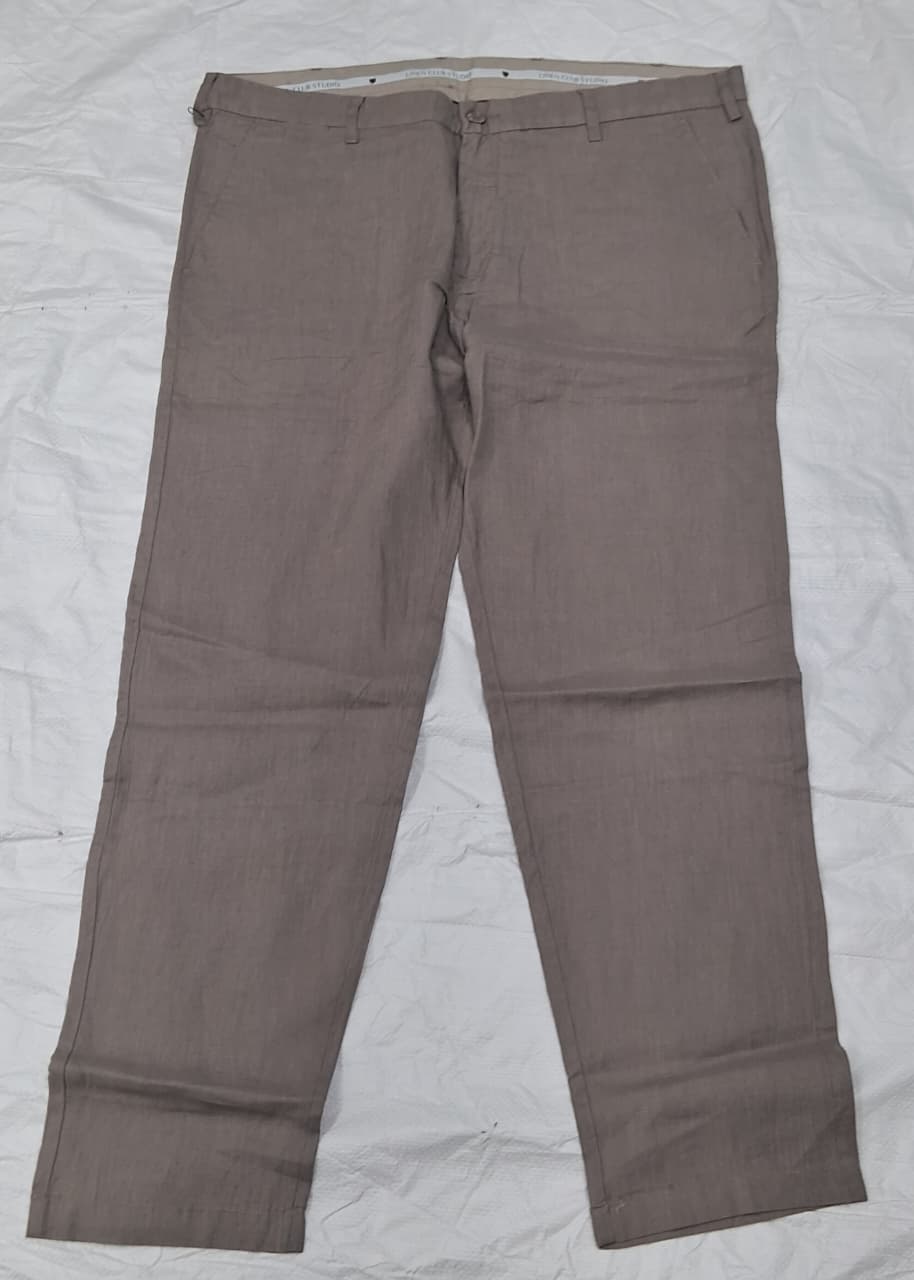
Mauve grey men's trousers with a fine woven surface laid flat
SP-01 Mauve grey — Fine woven surface A fine, mixed-tone surface that reads as a single soft colour at arm's length. Texture at this scale is what twills and fine weaves look like from across a meeting room.
Brown men's trousers with a textured weave laid flat
SP-02 Brown — Visible textured weave A deeper, more open-looking texture that shows irregularity in the yarn. Surfaces like this carry visual interest on their own and are easy to pair with plain shirts.
Brown melange men's trousers laid flat
SP-03 Brown melange — Heathered colour A mixed, heathered tone where lighter and darker flecks blend together — the melange effect described above. Notice how it softens the brown.
Grey-green men's trousers with a small dobby texture laid flat
SP-04 Grey-green — Small ribbed / dobby texture Fine horizontal ribbing gives the surface a woven-in texture. The five-pocket cut seen here leans casual; the texture itself is the point of reference.
Steel blue men's trousers with a fine textured surface laid flat
SP-05 Steel blue — Smooth, fine texture A close, smooth face with only a faint texture — the quietest of the five. Surfaces like this read nearly plain and sit easily in office wear.
Specimen note

Specimens are photographs of reference trousers, filed by visible tone and surface only. No fibre content or weave construction is claimed for them, and they do not indicate what Options Mall currently stocks.

§ 05Climate file

Cloth for a
warm, humid city.

Most fabric advice is written for temperate climates with four distinct seasons. A coastal city like Mumbai asks different questions: long stretches of heat and humidity, a heavy monsoon, and working days that alternate between the street and chilled air-conditioning. Choosing office formal pants here is mostly about managing those transitions.

  1. CL.1

    Weight before fibre

    A light, open weave in almost any fibre will feel cooler than a heavy, dense one. When comparing two trousers, feel the weight of the cloth before reading the fibre.

  2. CL.2

    Breathing fibres for the commute

    Natural fibres such as cotton, linen and lightweight wool generally handle moisture better than polyester-rich cloths. Blends trade some of that comfort for easier care.

  3. CL.3

    Air-conditioned interiors

    Offices kept cool make slightly more structured cloths comfortable indoors. Lightweight worsteds and wool blends sit well between a hot street and a cold meeting room.

  4. CL.4

    Monsoon months

    Damp air slows drying and can leave fabric smelling stale. Quick-drying blends, darker or mid tones that hide splashes, and a hem with no break help. Let wet trousers dry fully, hung by the hem, before storing.

  5. CL.5

    Lighter tones in the heat

    Light colours feel cooler in direct sun. Stone, beige and light grey formal pants pair well with the open, breathable cloths that suit the climate — see the colour studies.

  6. CL.6

    Cut helps cloth

    A little ease through the seat and thigh lets air move. A regular fit formal pant in a breathable cloth often feels cooler than a very slim one in the same fabric.

§ 06Conservation protocol

Care that keeps
the line.

Formal trousers are worn often and judged closely. General habits like these extend the life of most trouser fabrics — but the garment's own care label always comes first, because it reflects the specific fibre, dye and finish.

  1. C-01

    Read the label first

    Care labels state washing temperature, whether dry cleaning is recommended, and how hot an iron the cloth tolerates. Blends in particular combine fibres with different limits.

  2. C-02

    Hang by the hem

    Clip trousers upside down by the hem so their own weight pulls out creases from sitting. Alternatively fold along the crease over a wide, smooth bar.

  3. C-03

    Rest between wears

    A day off lets fibres — especially wool — recover and lets moisture from wear evaporate. Rotating two or three pairs is kinder to all of them than wearing one daily.

  4. C-04

    Steam to refresh, press to define

    Steaming relaxes wrinkles without flattening the surface. Pressing, through a cloth, is for restoring the crease. Pressing too hot or without a cloth can leave shine on dark wool and synthetics.

  5. C-05

    Clean less, spot-clean sooner

    Brushing and spot-cleaning between wears reduce how often a trouser needs full cleaning, which is where most wear on fabric and colour happens.

  6. C-06

    Empty the pockets

    Keys and phones stretch pocket bags and distort the hip line. Emptying pockets before hanging keeps the front flat.

  7. C-07

    Dry in shade

    Strong sun fades dark dyes, particularly navy and black. Where washing is allowed, dry inside out and out of direct sunlight.

  8. C-08

    Store with air

    In humid months give stored trousers space and airflow; avoid sealing them in plastic, which traps moisture.

§ 07Field method

How to read a fabric
in person.

A photograph shows colour and a hint of texture. Everything else — weight, spring, density, drape — has to be read with the hands and eyes. Four simple tests, used together, tell you more about a formal trouser fabric than any description. If you are looking for formal pants near you in Juhu or Vile Parle, these are worth doing with the trousers in hand at Options Mall.

T-01

Hand feel

Rub the cloth gently between thumb and fingers. Fine worsteds feel smooth and dry; woollens and flannels feel soft and lofty; cotton feels matte and dense; linen feels dry and slightly crisp; polyester-rich cloths often feel slick and uniform. Notice too whether the fabric feels cool or warm to the touch.

T-02

Recovery test

Gently crease a hidden corner — inside the waistband or a hem allowance — in your fist for a few seconds, then release. Cloths with good recovery smooth out quickly; those that keep a sharp mark will wrinkle the same way when you sit. Be gentle, and ask first if the garment isn't yours.

T-03

Hold to the light

Hold a single layer up to a window or lamp. A dense weave lets little light through and will usually feel more substantial and drape more heavily; an open weave glows and will breathe more. Light also reveals the weave structure itself — diagonals, ribs, slubs — more clearly than the flat face.

T-04

Drape on the hanger

Watch how the trouser falls when hung by the waistband or hem. A cloth with good drape hangs straight and settles quickly; a stiff one stands away from itself; a very light, fluid one may twist or cling. The hanger shows, in miniature, how the leg will fall when worn.

Surface
Look at the face in daylight at an angle. Sheen reveals synthetics and some fine worsteds; matte suggests cotton, linen or woollen cloths. Shine on the seat or knee of a worn trouser usually comes from heat and friction.
Inside
Turn a leg inside out. The reverse side shows whether a pattern is woven in or printed, and how cleanly the seams are finished — read more on the construction sheet.
Label
The fibre content and care label is the only reliable statement of what a cloth is made of. Use the tests above to understand how it behaves; use the label to know what it is.
§ 08Archive glossary

Terms filed
in this library.

With fibre and weave understood, the next question is how to wear them. Style Systems builds complete outfits around formal trousers, and the trouser collection shows the forms these fabrics are cut into.

Worsted
Yarn spun from long, combed, parallel fibres; smooth and crisp.
Woollen
Yarn spun from shorter, carded fibres; lofty, soft and textured.
Nap
A raised, brushed surface, as on flannel.
Slub
A thicker section in a yarn that creates natural irregularity, typical of linen.
Elastane
A highly elastic synthetic fibre added in small amounts for stretch.
Viscose
A regenerated fibre made from cellulose; soft and fluid.
Hand
How a fabric feels to the touch — smooth, dry, soft, crisp.
Drape
How a fabric falls and moves under its own weight.
Recovery
A fabric's ability to return to shape after being creased or stretched.
Weave
The pattern in which warp and weft threads interlace — plain, twill, basket and so on.
06Style SystemsNext sheet →